Monday, 7 September 2015

Samsung and Apple battle over the smartphone ‘floating voter’

Samsung UK boss says only 20% of smartphone buyers willing to switch between iOS and Android
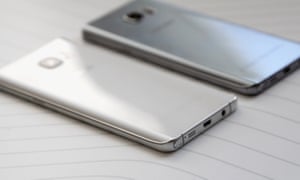


samsung galaxy note 5


Samsung and Apple are fighting over the technology world’s equivalent of the “floating voter”, according to Samsung’s president of UK and Ireland.
Andy Griffiths said customer loyalty to the two companies means most people never consider switching between Android and iOS, so the brands are actually competing for only 20% of customers in the UK.
“There are groups of people who stick with what they like, whether that’s Samsung or Apple, and then there are there are people in the middle that you can kind of sway, a bit like the floating voter, and that’s who we’re all fighting for,” Griffiths told the Guardian, as Samsung unveiled its new Galaxy S6 Edge+ and Note 5 devices.
“We hold about two-thirds of the Android base in the UK and we have a very high level of retention. The fact is that it’s a two-brand market and I think people are choosing to go both ways, so we’re always going to be trading customers between us.”
Data from research firm Consumer Intelligence Research Partners suggests that a similar situation exists in the US, where in the past two years 20% of iOS users switched to Android, and 16% of Android users switched to iOS.
Making these switches has become easier, with cross-syncing services helping people to take their personal information such as calendars, contacts and email accounts from one platform to another. Most popular apps are also now available on both platforms.

Smartphone saturation driving ‘kick down’ in sales

The battle for these “floating voters” has intensified as smartphone penetration has reached saturation point in markets like the UK and US, where most people who are likely to buy a smartphone already have one.
Advertisement
That has led to a dip in global sales for Samsung, which, like Apple, is facing up to the challenge of persuading people to upgrade to a newer handset.
“Overall saturation means a kick down in the market as it settles,” said Griffiths. “Once it reaches its new rhythm people will want a better phone than last time, and that step up is what we’ve seen in the UK.”
He added that in the UK, Samsung has helped to grow the premium market – smartphones costing upwards of £400 – by more than 30% since its Galaxy S6 launched in March, and expects that pattern to continue until Christmas.
A growing proportion of that premium market is made up of phablets – smartphones with screen sizes larger than 5.5in. Phablets accounted for 21% of US smartphone sales in the first quarter up nearly four times year on year, according to data from Kantar Worldpanel.
“The phablet category is three times bigger this year than last, and we believe there’s exponential growth in that size of smartphone, with one in 10 of every smartphone sold being 5.5in or above,” said Griffiths.

Phablets here to stay

Phablets also command some of the highest prices in the smartphone market, providing the biggest margins for smartphone manufacturers, explaining why both Apple and Samsung are pushing the supersized smartphone category so hard.
Griffiths said: “If you look at the proportion of the business by value in the premium end, phablets are a substantial sector and something we wanted to add to the recovery in our business in 2015.”
The odd thing about Samsung’s device lineup this year, however, is where and when it is launching its Note 5 phablet.
The Note line pioneered this category back in 2011, but its latest model does not yet have a UK launch date, making its debut instead in the US and Asia. In the UK, Samsung is relying on its 5.7in Galaxy S6 Edge+ for now.
One thing is clear, phablets aren’t going anywhere in the near term, with Griffiths admitting that phone screen size is increasing because “almost one of the last things you do on a smartphone is make a call”.
Read More

Usain Bolt Quits Athletics

Jamaican sprint king, Usain Bolt has ruled himself out of all upcoming races this year instead turning his attention to next year’s Rio de Janeiro 2016 Olympic Games.
 
The six-times Olympic champion revealed on his Facebook page that he would not be adding to .
Bolt won all three sprint titles for the fifth time at a major global championships which dates back to the 2008 Beijing Olympics.
The 29-year-old will now miss Friday’s Diamond League finale in Brussels.

His Facebook message reads: “I am already thinking about next year and the 2016 Olympic Games in Rio where I will attempt to defend my titles in the 100m, 200m and 4x100m. I will enjoy a short break from training now to recharge before resuming background training next month.
“I have competed in Brussels many times over the years and it is always one of the best meets on the circuit. The track is fast and they always have a full house.
“I was looking forward to running there this year but I’m happy to end the season without any injuries and ready to go for 2016.”

Jamaican, Usain Bolt, leads his team to the 4x100m race at the IAAF World Championships in Beijing, China
Read More

Thursday, 21 May 2015

Microsoft’s Phil Spencer wants to win PC gamers back, despite Games For Windows Live debacle

When Microsoft debuted Games for Windows — Live eight years ago, the platform was cheered as a way for the company to use its considerable marketing clout to improve the visibility of PC gaming. Features like Xbox 360 cross-play, voice, and text chat were all touted. GfWL was supposed to serve as the common core for better PC gaming, and it came at a cost: $49.95 a year for PC owners (though Xbox 360 owners who already had Gold memberships received GfWL for free). The service was controversial from the beginning, and quickly established a reputation for being hard to use, flaky, and unpopular. In recent comments, Microsoft’s Phil Spencer acknowledged these issues, but reiterated that Microsoft wants to win back gamers’ trust.
In an interview with Gamesradar, Spencer claims to embrace the skepticism PC users might feel towards Microsoft on this front, saying, “When I stand there talking about it, I’m not showing any fancy videos. I’m not trying to pizzazz you with anything other than ‘Here’s where we are; here’s what we’re trying to do.’ And the SDKs are available now.”
The obvious question is whether Microsoft can make substantial inroads in gaming against the other 800-pound gorilla in the room: Steam. Flash back to 2007, and Steam is a vastly different beast — PC gaming had a much larger brick-and-mortar distribution system than it does today, and Steam was a fraction of its current size. Today, however, Steam owns the majority of the PC gaming market, but not all of it. Competing services from EA and Ubisoft have gained traction simply by refusing to offer their own products over Steam.
One of the most hated drop-downs in existence.
Spencer seems to envision such a future, though he tries to minimize any potential conflict. “If you’re an Xbox developer, there are some tools that we’re providing that allow you to seamlessly move from Xbox to PC – Xbox Live and the Universal App Platform will be helpful for those guys,” he said. This, I think, is at the root of Gabe’s push into Linux and the entire concept of a Steam Machine. Microsoft is beginning to wake up to the idea that it could exploit its position in the gaming market and tie PC and Xbox together into a single unified platform.

Virtual Reality and Kinect

Spencer goes on to say that Microsoft isn’t focused on offering a VR product at the moment, though it continues to talk to other vendors about how to offer VR content like Minecraft for third-party devices. Strictly from a hardware perspective, this makes perfect sense. The recent published specs for the Oculus Rift make it clear that the device is going to require some significant hardware to function well. Sony can talk about building Project Morpheus for the PS4, but it’s unlikely that the upcoming headset will match Oculus’s visual quality — not if the entire system is driven by the midrange Radeon and octa-core Jaguar configuration inside that console. The Xbox One, with even fewer GPU resources, would face a steeper uphill climb.
Peripherals like HoloLens are still being discussed for potential Xbox One integration. Spencer was quick to declare that Kinect isn’t dead, though it’s difficult to see how that’snot the case. Microsoft can make mouth noises about the platform’s long-term potential and the value of giving consumers a choice over whether to buy the hardware, but there’s a hard fact underlying all the pretty words: Making a Kinect-enabled game required a great deal of attention to the capabilities of the platform. Patching in support for a handful of motions or voice commands was much easier for developers, but it kept the peripheral strictly in “optional” territory.
Now that gamers have overwhelmingly chosen to buy Kinect-less systems, there’s no value in building titles that specifically leverage the hardware — you’d be limiting yourself to a fraction of the Xbox One’s total install base. Of all the features that might drive Xbox One forward or create cross-platform buzz, Kinect isn’t going to be one of them.
Read More

Monday, 13 April 2015

An aluminum graphite battery that could charge your smartphone in 60 seconds


Smartphones are pretty amazing devices, but their most vexing problem remains battery life. No matter how power efficient the hardware gets, manufacturers end up using all of it and more for improved displays, faster performance, and more features. Now scientists at Stanford University may have come up with what is nothing short of the Holy Grail for mobile devices: an ultra-fast-charging aluminum battery that could be produced on a mass scale.
Just how fast are we talking about? 60 seconds.
“We have developed a rechargeable aluminum battery that may replace existing storage devices, such as alkaline batteries, which are bad for the environment, and lithium-ion batteries, which occasionally burst into flames,” said Hongjie Dai, professor of chemistry at Stanford, in a statement. “Our new battery won’t catch fire, even if you drill through it.”

The aluminum-ion battery contains a negatively charged anode and a positively charged graphite cathode. Researchers placed those two inside a flexible polymer-coated pouch with an ionic liquid electrolyte. Aluminum has always been a compelling material for battery design, but it’s been too difficult to work with. It’s inexpensive, not flammable, and could potentially have high capacities. The problem up until this point, the researchers said, is developing the right materials that could repeatedly produce sufficient voltage after multiple cycles of charging and discharging.
Current lithium-ion batteries in smartphones can take several hours to charge. Some manufacturers like Samsung and HTC have developed fast burst modes that give you 25 percent of initial battery life with just 15 minutes of charging, and have also baked in new slow-burn, emergency efficient modes to eke extra time out of the last few percentage points of battery life. But this new aluminum-ion battery prototype has “unprecedented charging times” down to just one minute. Plus, the researchers were able to charge and discharge the battery 7,500 times without loss of capacity, compared with 1,000 cycles or less for today’s packs.
The researchers said that in addition to phone batteries, the aluminum-ion design could also be used to store extra capacity in renewable power grids, and the two-volt output could also be an environmentally replacement for 1.5-volt disposable AA and AAA batteries.
And that’s where the research continues: That voltage, while better than the disposable batteries, is still only about half that what you need for a smartphone. It’s the last major hurdle, after inexpensive materials, safety, ultra-fast charging, and long life cycle. Here’s hoping they nail it, because at this point we’re all sick of having to charge our devices all the time.


Read More

Friday, 10 April 2015

Report: Google working on Apple iPhone compatibility for Android Wear


We’re not sure it’s going to do much for the current Apple Watch fever, but apparently Google’s not going to take Cupertino’s closed ecosystem sitting down. A new report says Google is working on getting its year-old Android Wear smartwatch platform to work with the iPhone, and is very close to finishing it. It’s from an anonymous source for now. But if true, it means Google would be able to position Android Wear-compatible watches from LG, Samsung, and other manufacturers right up against the new Apple Watch.
Android Wear is a fairly robust platform in its current state. It’s a touch-based interface that lets you swipe notifications and cards, and manufacturers are free to add an extra crown button or two (like Motorola did with the 360), but it’s not required. Android Wear acts as a notification center for your wrist, and duplicates the functionality on an Android phone. It also has built-in, voice-activated Google search, as well as Google Now information cards that are location-based. It also has Google Fit, which on supported devices can measure heart rate, steps, and other basic metrics.
LG G Watch R, round-faced Android Wear smartwatch
The LG G Watch R, a round-faced Android Wear smartwatch.
Having said all that, Android Wear hasn’t exactly caught on yet. Despite the initial promise of a Google-sanctioned smartwatch platform, in lieu of proprietary solutions and app platforms from Samsung, Sony LG, and others, reviewers have found Android Wear is still too difficult to use.
Remember that this wouldn’t be the first time a non-Apple watch worked with iOS. That’s been Pebble’s schtick since the beginning, after all, for both notifications and music playback, among other things. And it also remains to be seen whether Apple would even allow an Android Wear app from Google in its App Store. But Apple has learned over the years that its ecosystem stands tall on its own merits, and doesn’t necessarily need platform lockdown. Apple released iTunes for Windows platforms in late 2003, six months after it launched the iTunes Music Store and two years after the iPod first came out (and had only worked with Macs at the time). The same goes the other way, with Microsoft and its new Office apps for the iPad, now that Satya Nadella is running the show.
Would you buy an Android Wear watch for your iPhone? Or do you think this isn’t going to amount to much of anything? It’s tough to argue that a current Android Wear watch is better than the Apple Watch, although there’s hope if Motorola can shrink the Moto 360 and Google can continue to refine the software platform.
Read More

Tuesday, 31 March 2015

Nigeria election: Muhammadu Buhari wins

His opponent, Goodluck Jonathan, has conceded defeat and called Gen Buhari to congratulate him on his victory.
Gen Buhari was ahead of Mr Jonathan by at least three million votes.
Observers have generally praised the election but there have been allegations of fraud, which some fear could lead to protests and violence.
However, a spokesman for Gen Buhari's All Progressives Congress (APC) party praised Mr Jonathan, saying: "He will remain a hero for this move. The tension will go down dramatically."
"Anyone who tries to foment trouble on the account that they have lost the election will be doing so purely on his own," the spokesman added in quotes carried by Reuters.
This is a hugely significant moment in Nigeria's history - never before has a sitting president lost an election, the BBC's Will Ross reports from Abuja.
For the first time, many Nigerians feel they have the power to vote out a government that is not performing well, our correspondent adds.
Nigeria has suffered from several attacks by the Islamist militant group Boko Haram, which has killed thousands of people in its drive to establish an Islamic state.
Many voters have said that they believe Gen Buhari is better positioned to defeat Boko Haram. intellicore.blogspot.com
Read More

Saturday, 21 March 2015

Linux’s worst-case scenario: Windows 10 makes Secure Boot mandatory, locks out other operating systems


Microsoft unveiled new information about Windows 10 at its WinHEC conference in China today, and the news is deeply concerning to anyone who values the ability to run non-Microsoft operating systems on their own hardware. Like Windows 8, Windows 10 will ship with support for the UEFI Secure Boot standard — but this time, the off switch (previously mandatory) is now optional.
Let’s back up and review what Secure Boot is. As the name implies, Secure Boot is a security measure that’s meant to protect PCs from certain types of malware that are typically loaded before the OS boot process has begun. With Secure Boot active, the UEFI checks the cryptographic signature of any program that it’s told to load, including the OS bootloader.
Secure-Boot-uefi-2
The image above shows the conventional boot process compared with the Secure Boot process. There’s nothing intrinsically wrong with Secure Boot, and multiple Linux distros support the capability. The problem is, Microsoft mandates that Secure Boot ships enabled. This caused panic in the open source community back in 2011, since the firmware is configured with a list of signed, acceptable keys when the user receives the system. If an alternative OS bootloader isn’t signed with an appropriate key on a Secure Boot-enabled system, the UEFI will refuse to boot the drive.
Microsoft defused the situation back then by mandating that all x86 systems ship with the ability to disable Secure Boot, and by partnering with VeriSign to create a method of signing third-party binaries in exchange for a $99 fee. With Windows 10, the situation is changing.

How Windows 10 changes things

OEMs are still required to ship Secure Boot, but the previously mandatory disable switch is now optional, as Ars Technica reports. With Windows 8, MS had split the feature by CPU architecture — x86 chips had to offer a disable switch, but ARM chips didn’t. Now, the split is between desktop and mobile, where desktop users can choose to offer the option, but mobile devices must leave Secure Boot locked on.
Windows 10 Secure Boot
Image courtesy of Ars Technica
What this means for the future of Linux and alternative OSes is unclear at best. Those who build their own desktops will retain the ability to disable Secure Boot, since Asus or MSI doesn’t know what kind of operating system you’re going to load on the board. But laptops are a different story. Some laptop vendors will undoubtedly continue to ship a “Disable” option on Secure Boot, but vendors like HP and Dell may simply decide that closing the attack vector is more important than user freedom, particularly when the margin on PCs is so low to begin with. When every support call is measured against the handful of dollars an OEM makes on each machine, eliminating the need for such interaction is extremely attractive.
It’s not clear, as of this writing, whether Linux and BSD distro developers will be able to sign their software and install to a Windows 10 system with Secure Boot enabled or not. Regardless, it’s difficult not to see this as another step along the long, slow journey of locking down PC hardware and making it more difficult for end users to control their own software. Psychological research has long confirmed the power of default settings — ship something enabled (or disabled), and the vast majority of users will never change the option. Given that Windows machines were already required to enable Secure Boot by default, where’s the security benefit in making the kill switch optional?
As far as we can tell, there isn’t one.
Read More

Socialize With Us

Find Us Now

PAGE HITS

Powered by Blogger.

Sample Text

Popular Posts

Total Pageviews

© Manitrix, AllRightsReserved.

Designed By:MEGAMIND TECHNOLOGIES Powered By MegaMedia