Monday, 7 September 2015

Samsung and Apple battle over the smartphone ‘floating voter’

Samsung UK boss says only 20% of smartphone buyers willing to switch between iOS and Android
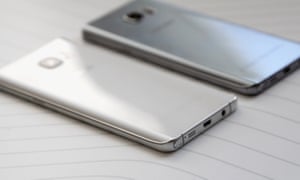


samsung galaxy note 5


Samsung and Apple are fighting over the technology world’s equivalent of the “floating voter”, according to Samsung’s president of UK and Ireland.
Andy Griffiths said customer loyalty to the two companies means most people never consider switching between Android and iOS, so the brands are actually competing for only 20% of customers in the UK.
“There are groups of people who stick with what they like, whether that’s Samsung or Apple, and then there are there are people in the middle that you can kind of sway, a bit like the floating voter, and that’s who we’re all fighting for,” Griffiths told the Guardian, as Samsung unveiled its new Galaxy S6 Edge+ and Note 5 devices.
“We hold about two-thirds of the Android base in the UK and we have a very high level of retention. The fact is that it’s a two-brand market and I think people are choosing to go both ways, so we’re always going to be trading customers between us.”
Data from research firm Consumer Intelligence Research Partners suggests that a similar situation exists in the US, where in the past two years 20% of iOS users switched to Android, and 16% of Android users switched to iOS.
Making these switches has become easier, with cross-syncing services helping people to take their personal information such as calendars, contacts and email accounts from one platform to another. Most popular apps are also now available on both platforms.

Smartphone saturation driving ‘kick down’ in sales

The battle for these “floating voters” has intensified as smartphone penetration has reached saturation point in markets like the UK and US, where most people who are likely to buy a smartphone already have one.
Advertisement
That has led to a dip in global sales for Samsung, which, like Apple, is facing up to the challenge of persuading people to upgrade to a newer handset.
“Overall saturation means a kick down in the market as it settles,” said Griffiths. “Once it reaches its new rhythm people will want a better phone than last time, and that step up is what we’ve seen in the UK.”
He added that in the UK, Samsung has helped to grow the premium market – smartphones costing upwards of £400 – by more than 30% since its Galaxy S6 launched in March, and expects that pattern to continue until Christmas.
A growing proportion of that premium market is made up of phablets – smartphones with screen sizes larger than 5.5in. Phablets accounted for 21% of US smartphone sales in the first quarter up nearly four times year on year, according to data from Kantar Worldpanel.
“The phablet category is three times bigger this year than last, and we believe there’s exponential growth in that size of smartphone, with one in 10 of every smartphone sold being 5.5in or above,” said Griffiths.

Phablets here to stay

Phablets also command some of the highest prices in the smartphone market, providing the biggest margins for smartphone manufacturers, explaining why both Apple and Samsung are pushing the supersized smartphone category so hard.
Griffiths said: “If you look at the proportion of the business by value in the premium end, phablets are a substantial sector and something we wanted to add to the recovery in our business in 2015.”
The odd thing about Samsung’s device lineup this year, however, is where and when it is launching its Note 5 phablet.
The Note line pioneered this category back in 2011, but its latest model does not yet have a UK launch date, making its debut instead in the US and Asia. In the UK, Samsung is relying on its 5.7in Galaxy S6 Edge+ for now.
One thing is clear, phablets aren’t going anywhere in the near term, with Griffiths admitting that phone screen size is increasing because “almost one of the last things you do on a smartphone is make a call”.
Read More

Usain Bolt Quits Athletics

Jamaican sprint king, Usain Bolt has ruled himself out of all upcoming races this year instead turning his attention to next year’s Rio de Janeiro 2016 Olympic Games.
 
The six-times Olympic champion revealed on his Facebook page that he would not be adding to .
Bolt won all three sprint titles for the fifth time at a major global championships which dates back to the 2008 Beijing Olympics.
The 29-year-old will now miss Friday’s Diamond League finale in Brussels.

His Facebook message reads: “I am already thinking about next year and the 2016 Olympic Games in Rio where I will attempt to defend my titles in the 100m, 200m and 4x100m. I will enjoy a short break from training now to recharge before resuming background training next month.
“I have competed in Brussels many times over the years and it is always one of the best meets on the circuit. The track is fast and they always have a full house.
“I was looking forward to running there this year but I’m happy to end the season without any injuries and ready to go for 2016.”

Jamaican, Usain Bolt, leads his team to the 4x100m race at the IAAF World Championships in Beijing, China
Read More

Thursday, 21 May 2015

Microsoft’s Phil Spencer wants to win PC gamers back, despite Games For Windows Live debacle

When Microsoft debuted Games for Windows — Live eight years ago, the platform was cheered as a way for the company to use its considerable marketing clout to improve the visibility of PC gaming. Features like Xbox 360 cross-play, voice, and text chat were all touted. GfWL was supposed to serve as the common core for better PC gaming, and it came at a cost: $49.95 a year for PC owners (though Xbox 360 owners who already had Gold memberships received GfWL for free). The service was controversial from the beginning, and quickly established a reputation for being hard to use, flaky, and unpopular. In recent comments, Microsoft’s Phil Spencer acknowledged these issues, but reiterated that Microsoft wants to win back gamers’ trust.
In an interview with Gamesradar, Spencer claims to embrace the skepticism PC users might feel towards Microsoft on this front, saying, “When I stand there talking about it, I’m not showing any fancy videos. I’m not trying to pizzazz you with anything other than ‘Here’s where we are; here’s what we’re trying to do.’ And the SDKs are available now.”
The obvious question is whether Microsoft can make substantial inroads in gaming against the other 800-pound gorilla in the room: Steam. Flash back to 2007, and Steam is a vastly different beast — PC gaming had a much larger brick-and-mortar distribution system than it does today, and Steam was a fraction of its current size. Today, however, Steam owns the majority of the PC gaming market, but not all of it. Competing services from EA and Ubisoft have gained traction simply by refusing to offer their own products over Steam.
One of the most hated drop-downs in existence.
Spencer seems to envision such a future, though he tries to minimize any potential conflict. “If you’re an Xbox developer, there are some tools that we’re providing that allow you to seamlessly move from Xbox to PC – Xbox Live and the Universal App Platform will be helpful for those guys,” he said. This, I think, is at the root of Gabe’s push into Linux and the entire concept of a Steam Machine. Microsoft is beginning to wake up to the idea that it could exploit its position in the gaming market and tie PC and Xbox together into a single unified platform.

Virtual Reality and Kinect

Spencer goes on to say that Microsoft isn’t focused on offering a VR product at the moment, though it continues to talk to other vendors about how to offer VR content like Minecraft for third-party devices. Strictly from a hardware perspective, this makes perfect sense. The recent published specs for the Oculus Rift make it clear that the device is going to require some significant hardware to function well. Sony can talk about building Project Morpheus for the PS4, but it’s unlikely that the upcoming headset will match Oculus’s visual quality — not if the entire system is driven by the midrange Radeon and octa-core Jaguar configuration inside that console. The Xbox One, with even fewer GPU resources, would face a steeper uphill climb.
Peripherals like HoloLens are still being discussed for potential Xbox One integration. Spencer was quick to declare that Kinect isn’t dead, though it’s difficult to see how that’snot the case. Microsoft can make mouth noises about the platform’s long-term potential and the value of giving consumers a choice over whether to buy the hardware, but there’s a hard fact underlying all the pretty words: Making a Kinect-enabled game required a great deal of attention to the capabilities of the platform. Patching in support for a handful of motions or voice commands was much easier for developers, but it kept the peripheral strictly in “optional” territory.
Now that gamers have overwhelmingly chosen to buy Kinect-less systems, there’s no value in building titles that specifically leverage the hardware — you’d be limiting yourself to a fraction of the Xbox One’s total install base. Of all the features that might drive Xbox One forward or create cross-platform buzz, Kinect isn’t going to be one of them.
Read More

Monday, 13 April 2015

An aluminum graphite battery that could charge your smartphone in 60 seconds


Smartphones are pretty amazing devices, but their most vexing problem remains battery life. No matter how power efficient the hardware gets, manufacturers end up using all of it and more for improved displays, faster performance, and more features. Now scientists at Stanford University may have come up with what is nothing short of the Holy Grail for mobile devices: an ultra-fast-charging aluminum battery that could be produced on a mass scale.
Just how fast are we talking about? 60 seconds.
“We have developed a rechargeable aluminum battery that may replace existing storage devices, such as alkaline batteries, which are bad for the environment, and lithium-ion batteries, which occasionally burst into flames,” said Hongjie Dai, professor of chemistry at Stanford, in a statement. “Our new battery won’t catch fire, even if you drill through it.”

The aluminum-ion battery contains a negatively charged anode and a positively charged graphite cathode. Researchers placed those two inside a flexible polymer-coated pouch with an ionic liquid electrolyte. Aluminum has always been a compelling material for battery design, but it’s been too difficult to work with. It’s inexpensive, not flammable, and could potentially have high capacities. The problem up until this point, the researchers said, is developing the right materials that could repeatedly produce sufficient voltage after multiple cycles of charging and discharging.
Current lithium-ion batteries in smartphones can take several hours to charge. Some manufacturers like Samsung and HTC have developed fast burst modes that give you 25 percent of initial battery life with just 15 minutes of charging, and have also baked in new slow-burn, emergency efficient modes to eke extra time out of the last few percentage points of battery life. But this new aluminum-ion battery prototype has “unprecedented charging times” down to just one minute. Plus, the researchers were able to charge and discharge the battery 7,500 times without loss of capacity, compared with 1,000 cycles or less for today’s packs.
The researchers said that in addition to phone batteries, the aluminum-ion design could also be used to store extra capacity in renewable power grids, and the two-volt output could also be an environmentally replacement for 1.5-volt disposable AA and AAA batteries.
And that’s where the research continues: That voltage, while better than the disposable batteries, is still only about half that what you need for a smartphone. It’s the last major hurdle, after inexpensive materials, safety, ultra-fast charging, and long life cycle. Here’s hoping they nail it, because at this point we’re all sick of having to charge our devices all the time.


Read More

Friday, 10 April 2015

Report: Google working on Apple iPhone compatibility for Android Wear


We’re not sure it’s going to do much for the current Apple Watch fever, but apparently Google’s not going to take Cupertino’s closed ecosystem sitting down. A new report says Google is working on getting its year-old Android Wear smartwatch platform to work with the iPhone, and is very close to finishing it. It’s from an anonymous source for now. But if true, it means Google would be able to position Android Wear-compatible watches from LG, Samsung, and other manufacturers right up against the new Apple Watch.
Android Wear is a fairly robust platform in its current state. It’s a touch-based interface that lets you swipe notifications and cards, and manufacturers are free to add an extra crown button or two (like Motorola did with the 360), but it’s not required. Android Wear acts as a notification center for your wrist, and duplicates the functionality on an Android phone. It also has built-in, voice-activated Google search, as well as Google Now information cards that are location-based. It also has Google Fit, which on supported devices can measure heart rate, steps, and other basic metrics.
LG G Watch R, round-faced Android Wear smartwatch
The LG G Watch R, a round-faced Android Wear smartwatch.
Having said all that, Android Wear hasn’t exactly caught on yet. Despite the initial promise of a Google-sanctioned smartwatch platform, in lieu of proprietary solutions and app platforms from Samsung, Sony LG, and others, reviewers have found Android Wear is still too difficult to use.
Remember that this wouldn’t be the first time a non-Apple watch worked with iOS. That’s been Pebble’s schtick since the beginning, after all, for both notifications and music playback, among other things. And it also remains to be seen whether Apple would even allow an Android Wear app from Google in its App Store. But Apple has learned over the years that its ecosystem stands tall on its own merits, and doesn’t necessarily need platform lockdown. Apple released iTunes for Windows platforms in late 2003, six months after it launched the iTunes Music Store and two years after the iPod first came out (and had only worked with Macs at the time). The same goes the other way, with Microsoft and its new Office apps for the iPad, now that Satya Nadella is running the show.
Would you buy an Android Wear watch for your iPhone? Or do you think this isn’t going to amount to much of anything? It’s tough to argue that a current Android Wear watch is better than the Apple Watch, although there’s hope if Motorola can shrink the Moto 360 and Google can continue to refine the software platform.
Read More

Tuesday, 31 March 2015

Nigeria election: Muhammadu Buhari wins

His opponent, Goodluck Jonathan, has conceded defeat and called Gen Buhari to congratulate him on his victory.
Gen Buhari was ahead of Mr Jonathan by at least three million votes.
Observers have generally praised the election but there have been allegations of fraud, which some fear could lead to protests and violence.
However, a spokesman for Gen Buhari's All Progressives Congress (APC) party praised Mr Jonathan, saying: "He will remain a hero for this move. The tension will go down dramatically."
"Anyone who tries to foment trouble on the account that they have lost the election will be doing so purely on his own," the spokesman added in quotes carried by Reuters.
This is a hugely significant moment in Nigeria's history - never before has a sitting president lost an election, the BBC's Will Ross reports from Abuja.
For the first time, many Nigerians feel they have the power to vote out a government that is not performing well, our correspondent adds.
Nigeria has suffered from several attacks by the Islamist militant group Boko Haram, which has killed thousands of people in its drive to establish an Islamic state.
Many voters have said that they believe Gen Buhari is better positioned to defeat Boko Haram. intellicore.blogspot.com
Read More

Saturday, 21 March 2015

Linux’s worst-case scenario: Windows 10 makes Secure Boot mandatory, locks out other operating systems


Microsoft unveiled new information about Windows 10 at its WinHEC conference in China today, and the news is deeply concerning to anyone who values the ability to run non-Microsoft operating systems on their own hardware. Like Windows 8, Windows 10 will ship with support for the UEFI Secure Boot standard — but this time, the off switch (previously mandatory) is now optional.
Let’s back up and review what Secure Boot is. As the name implies, Secure Boot is a security measure that’s meant to protect PCs from certain types of malware that are typically loaded before the OS boot process has begun. With Secure Boot active, the UEFI checks the cryptographic signature of any program that it’s told to load, including the OS bootloader.
Secure-Boot-uefi-2
The image above shows the conventional boot process compared with the Secure Boot process. There’s nothing intrinsically wrong with Secure Boot, and multiple Linux distros support the capability. The problem is, Microsoft mandates that Secure Boot ships enabled. This caused panic in the open source community back in 2011, since the firmware is configured with a list of signed, acceptable keys when the user receives the system. If an alternative OS bootloader isn’t signed with an appropriate key on a Secure Boot-enabled system, the UEFI will refuse to boot the drive.
Microsoft defused the situation back then by mandating that all x86 systems ship with the ability to disable Secure Boot, and by partnering with VeriSign to create a method of signing third-party binaries in exchange for a $99 fee. With Windows 10, the situation is changing.

How Windows 10 changes things

OEMs are still required to ship Secure Boot, but the previously mandatory disable switch is now optional, as Ars Technica reports. With Windows 8, MS had split the feature by CPU architecture — x86 chips had to offer a disable switch, but ARM chips didn’t. Now, the split is between desktop and mobile, where desktop users can choose to offer the option, but mobile devices must leave Secure Boot locked on.
Windows 10 Secure Boot
Image courtesy of Ars Technica
What this means for the future of Linux and alternative OSes is unclear at best. Those who build their own desktops will retain the ability to disable Secure Boot, since Asus or MSI doesn’t know what kind of operating system you’re going to load on the board. But laptops are a different story. Some laptop vendors will undoubtedly continue to ship a “Disable” option on Secure Boot, but vendors like HP and Dell may simply decide that closing the attack vector is more important than user freedom, particularly when the margin on PCs is so low to begin with. When every support call is measured against the handful of dollars an OEM makes on each machine, eliminating the need for such interaction is extremely attractive.
It’s not clear, as of this writing, whether Linux and BSD distro developers will be able to sign their software and install to a Windows 10 system with Secure Boot enabled or not. Regardless, it’s difficult not to see this as another step along the long, slow journey of locking down PC hardware and making it more difficult for end users to control their own software. Psychological research has long confirmed the power of default settings — ship something enabled (or disabled), and the vast majority of users will never change the option. Given that Windows machines were already required to enable Secure Boot by default, where’s the security benefit in making the kill switch optional?
As far as we can tell, there isn’t one.
Read More

Thursday, 19 March 2015

Windows 10 to get biometric sensor support with ‘Windows Hello’

Hello

When it launches later this year, Windows 10 will include software support for Windows Hello, but it sounds like you’re going to need some specific hardware to take full advantage of it. Fingerprint readers are well-established, so any computer mobile device that has the necessary hardware will be able to use the built-in Windows Hello security features. The face and iris scanning, on the other hand, are probably going to require a new computer or add-on.Microsoft is trying to move beyond the password with Windows 10 using a new feature called Windows Hello. That’s the blanket term Redmond is using to describe a set of biometricidentification technologies, including facial recognition, iris scanning, and fingerprint readers. These features will also be extended into the online world with Microsoft Passport to save you from ever typing a password again. Okay, maybe not ever, but hopefully less often.
The facial recognition engine is based on technology used in the Kinect Xbox camera. It relies on IR illumination to capture more points of reference on the face and operate in a wider range of lighting conditions. It can even see past a beard or makeup that might confuse other systems. Microsoft says the system is very good at only unlocking for you, but what about a photograph of you? The IR camera should also be able to tell the difference between a real face and the photo. By comparison, the Trusted Face system on newer Android phones can still be fooled by a picture of the owner.
Iris scanning will also require specialized hardware, but I imagine this will be less common in the consumer space. Device makers will be able to integrate front-facing IR cameras on phones and mobile devices that can scan irises as well as faces, but it will probably be an added expense most people don’t need.
Microsoft is also working to make Hello an important part of the Microsoft Passport single sign-in service. So, let’s say you’ve got a Windows 10 PC with a front-facing IR camera and facial recognition set up. After the machine verifies that you are indeed who you claim to be, it will automatically authenticate with Passport. Any site, app, or service that integrates Passport should then allow you immediate access from that device without typing a password.
Passport doesn’t have to transmit your face or fingerprint anywhere to log you into websites, though. All the recognition happens locally first — then Passport cryptographically authenticates you with compatible services. If an Internet ne’er-do-well were to gain access to the information stored on a Passport-enabled website’s server, all they would get is your public encryption key, which isn’t of any use.
Microsoft is working with OEMs to make sure there are Hello-compatible systems available when Windows 10 launches. There will also be some advanced webcams like the Intel RealSense F200 that can be plugged into existing computers to allow face and iris scanning.
Read More

Saturday, 14 March 2015

Samsung Galaxy S6 vs. HTC One M9: Design matters

Samsung and HTC both know what it’s like to be the top Android device maker. Samsung currently occupies that position, but HTC is struggling to climb back from a tough couple of years. Samsung has stumbled in the past year, but the newly announcedGalaxy S6 is its chance to turn around slumping sales. At the same time, HTC is looking to keep its recent momentum going with the One M9. This year Samsung is changing it up dramatically, but HTC is staying the course. Let’s see how these 2015 flagships stack up.

Design and style

If you’ve held one Samsung phone, you’ve held them all, right? Light, somewhat cheap-feeling, and almost entirely plastic — that was Samsung’s modus operandi before mid-2014 when it became apparent Galaxy S5 sales were coming in significantly below expectations. It began tinkering with metal frames and tweaked designs, but the Galaxy S6 is more than a tweak.
While it retains that general Samsung aesthetic, the GS6 has virtually no plastic anywhere. The front (with its 5.1-inch screen) and back are both glass, and the frame is aluminum. No more of that painted chrome plastic for Samsung’s flagship. There are two versions of the GS6, one with a regular flat screen and another with a curved panel that slopes down at the edges. I don’t see the point of this personally, but it does look kind of neat. It might be annoying in practice, though.
Edge
On the face is a physical home button flanked by capacitive multitasking and back buttons. The fingerprint reader is now a touch sensor rather than swipe-based. The GS6 does bear a striking resemblance to the iPhone 6, but you can’t blame Samsung for doing what works. Samsung did, however, do a good job of slimming down the bezels from the GS5, which always felt rather clunky to me.
Samsung’s devices have always had two notable features — a removable battery and microSD card slot. The Galaxy S6 doesn’t have either. I find this strange, especially for Samsung, but it has bumped the base model’s storage to 32GB and will offer both 64GB and 128GB (wow) versions.
The Galaxy S6 has a lot in common with the HTC One M9. The M9 too is a sealed phone just like the M8 was. The battery doesn’t come out, but there is a microSD card slot. The Galaxy S6 looks much different than its predecessor, but HTC changed very little from the M8 to the M9. Again it’s a rounded unibody aluminum frame with a 5-inch screen (more on that later) and dual front-facing Boom Sound speakers. If you see the M9 from certain angles, you might not even be able to tell it from the M8.
HTC has made a few changes in the design, as an eagle-eyed observer will note. First, the black bezel at the bottom of the front has been shrunk a touch and the top-mounted power button has moved to the side. Some of the lines on the phone are also ever so slightly different as well. Around back there’s a single large camera sensor instead of the dual cameras from the M8.
So both phones will feel very premium, but the M9 will feel about the same as last year’s model did. Samsung changed a lot to catch up in the general look and feel department.

Batteries vs. screens

HTC and Samsung have both stuck with identical screen sizes from last year’s flagships. The GS6 is sporting a 5.1-inch Super AMOLED panel and the M9 has a 5-inch LCD. Samsung’s screen might be the same size, but the resolution has been bumped up to 2560×1440. HTC will use 1080p for the third year in a row, probably because 1440p LCD panels are still rather mediocre.
Samsung’s quad-HD AMOLED will pack in a lot more pixels in a smaller space than other phones. It works out to a staggering 576 pixels per inch. The One M9 will again offer a “mere” 440 pixels per inch. One of those numbers is definitely larger than the other, but there are very few instances where most people will be able to notice the difference in resolution. If you’ve got less than perfect vision, those extra pixels on the GS6 might be wasted anyway.
GS6 screen
These screens are also based on completely different technologies. Samsung makes the best AMOLED screens in the world, and it shows. The panel used on the Note 4 was devastatingly gorgeous, and the GS6 will probably look even better. Samsung has overcome many of AMOLED’s issues like low brightness and inaccurate, too-warm colors. Meanwhile, LCD is a reliable technology that offers accurate colors and good outdoor visibility. HTC tends to choose very good LCD panels too.
So, it’s likely that Samsung has a more impressive screen on its flagship device, but the battery has only grown a little to 2550mAh (2600 in the Edge variant). It should get solid battery life, but HTC’s 1080p LCD will use much less juice in most instances and it packs a larger 2840mAh cell. That should translate to much better battery life with more screen-on time for HTC.
Both of these screens have their strengths, but it’s up to you to decide what’s most important — being pretty or lasting a long time.

Cameras

HTC first introduced the 4MP UltraPixel camera to the world in 2013 with the One M7. In 2014 it put out the M8 with another 4MP camera, but an additional depth sensor was added. The “Duo Camera” was mostly ignored by consumers, and this year HTC is going back to basics with a single high-resolution camera. The One M9 has a 20MP camera on the back and a 4MP UltraPixel sensor on the front.
The M9 has only just been announced, so it’s impossible to say how good the photos will be. At the very least HTC will have more to work with. At 4MP, you couldn’t crop a photo from the M8 even a little bit without seeing some blurring. It will come down to how well HTC has optimized the software and post-processing. However, one major knock against the M9 is the lack of optical image stabilization. That’s the technology that helps avoid blurriness in longer exposures from hand shaking.
2015-03-01-image-6
Samsung has consistently been at the top of the heap when it comes to photography on Android. The hardware is almost the same across OEMs these days, but Samsung has some truly excellent software tricks that can pull above average images out of poorly lit environments. The HDR shots that come out of Samsung’s phones have also been excellent.
The Galaxy S6 will come equipped with a 16MP camera, which is the same as last year. Samsung uses phase detection to speed up focusing and promises the GS6 will be even faster than the Galaxy S5 was. It has optical image stabilization, which is good for pictures in low light and HDR. However, that makes the camera module a little thick, meaning there’s a noticeable hump on the back of the Galaxy S6.
Both these devices have the ingredients to take great pictures. HTC has a lot of ground to make up, though.

Internals and charging

Usually, there’s very little difference on the inside of flagship phones. They’re always using the latest and greatest from Qualcomm, but this year is a bit weird. Samsung allegedly encountered overheating issues with the Snapdragon 810 during the design phase, so it ditched Qualcomm’s chip in favor of its own in-house Exynos solution. HTC, on the other hand, didn’t have many options and has opted to use the Snapdragon 810 in the M9.
Read More

Friday, 13 March 2015

Sony to launch PlayStation Vue IPTV in three US cities soon


Later this month, Sony will be launching PlayStation Vue in three major US markets. New York, Chicago and Philadelphia will receive access in the next two weeks, and the service will supposedly roll out to the rest of the US later in 2015. We still don’t know pricing and firm launch details, but if this gains enough traction, this could potentially turn Sony into a major player in the burgeoning business of IPTV.
Over at the Wall Street Journal, Sony’s Andrew House laid out some of the plans for the initial launch of PlayStation Vue. Unfortunately, the details remain fuzzy. For example, I live in the Philadelphia metropolitan area, but not in Philadelphia itself. Will I be eligible for early access to Vue? I have no idea. How much will subscribers have to pay? No clue. Sony is staying mum on much of the nitty gritty, so it’s hard to gauge the value of this service just yet.
Later this month, Sony will be launching PlayStation Vue in three major US markets. New York, Chicago and Philadelphia will receive access in the next two weeks, and the service will supposedly roll out to the rest of the US later in 2015. We still don’t know pricing and firm launch details, but if this gains enough traction, this could potentially turn Sony into a major player in the burgeoning business of IPTV.
Over at the Wall Street Journal, Sony’s Andrew House laid out some of the plans for the initial launch of PlayStation Vue. Unfortunately, the details remain fuzzy. For example, I live in the Philadelphia metropolitan area, but not in Philadelphia itself. Will I be eligible for early access to Vue? I have no idea. How much will subscribers have to pay? No clue. Sony is staying mum on much of the nitty gritty, so it’s hard to gauge the value of this service just yet.

Originally announced back in November of last year, PlayStation Vue is aimed directly at cord-cutters. With CBS, Discovery, FOX, NBC, Scripps, and Viacom on board as content partners, this actually has the potential to succeed. However, it needs to be the right content at the right price. If we’re talking $10 to $20 per month for all of Vue’s live and on-demand content, that’s definitely going to entice the cable-free among us. But if it ends up as a tiered service with the best content locked away behind $40 and $50 packages, it’ll be no better than traditional cable services. Sony really needs to get this right, or Vue will fade to the background like all of Sony’s past streaming efforts.
Initially, the PlayStation Vue service will be available on PS3 and PS4 consoles exclusively, but Sony doesn’t plan on keeping it exclusive for very long. An iPad app is in the works, and support for other devices has already been promised. It’s highly unlikely that it will ever come to the Xbox One, but Roku and Apple TV may well be in the realm of possibilities. After all, Sony isn’t in much of a position to turn away more revenue.
The PS4’s success is definitely a bright spot for Sony, but its flagging TV business and its lackluster digital storefronts have left the Tokyo-based company in a vulnerable position. Vue could be the next big thing or a giant flop. But it’s still way too early to tell.
Originally announced back in November of last year, PlayStation Vue is aimed directly at cord-cutters. With CBS, Discovery, FOX, NBC, Scripps, and Viacom on board as content partners, this actually has the potential to succeed. However, it needs to be the right content at the right price. If we’re talking $10 to $20 per month for all of Vue’s live and on-demand content, that’s definitely going to entice the cable-free among us. But if it ends up as a tiered service with the best content locked away behind $40 and $50 packages, it’ll be no better than traditional cable services. Sony really needs to get this right, or Vue will fade to the background like all of Sony’s past streaming efforts.
Initially, the PlayStation Vue service will be available on PS3 and PS4 consoles exclusively, but Sony doesn’t plan on keeping it exclusive for very long. An iPad app is in the works, and support for other devices has already been promised. It’s highly unlikely that it will ever come to the Xbox One, but Roku and Apple TV may well be in the realm of possibilities. After all, Sony isn’t in much of a position to turn away more revenue.
The PS4’s success is definitely a bright spot for Sony, but its flagging TV business and its lackluster digital storefronts have left the Tokyo-based company in a vulnerable position. Vue could be the next big thing or a giant flop. But it’s still way too early to tell.
Read More

Saturday, 21 February 2015

Check your JAMB Course Statistics - Number of students that applied for your course


Have you ever wondered how many JAMB candidates you are competing with for your particular course in your school of choice?

What we mean is;
Suppose you are applying for Civil Engineering in Unilorin, you can now determine how many candidates are applying for that exact civil engineering.

To learn how to know the number of candidates that applied for your course in your school of choice, follow these steps;

NOTE: You would need either a system or mobile device that can read PDF files.click here
Read More

Monday, 16 February 2015

Student develops cream that can remove your regrettable tattoo

Getting a tattoo is not a decision to rush into without thinking things through. After all, it’s no walk in the park to get ink out of your skin after you’ve had it injected by way of thousands upon thousands of needle punctures. At least it isn’t easy right now. PhD student Alec Falkenham at Dalhousie University is working on a cream that he thinks will be able to remove an ill conceived tattoo without further abusing your skin.
Tattooing has been around in one form or another for thousands of years. While the modern practice relies on electric tattoo machines that jab you with needles at high speed, the basic principle is the same as it ever was — a sharp object punctures the skin and deposits a small droplet of ink. Do this enough times and you can draw solid lines and shapes. The cellular process that occurs during the healing process is what makes the ink stick around for decades and also what enables Falkenham’s process, known as bisphosphonate liposomal tattoo removal (or BLRT), to supposedly wipe the skin clean.
When ink is introduced by a tattoo machine it ends up in the epidermis (which peels off during healing) and the top few layers of the dermis. As with all foreign material, this elicits an immune response. On the front line of the immune system are macrophages, giant white blood cells that gobble up anything that seems like it shouldn’t be there. That is, anything that isn’t you. Some of the ink is carried out of the skin by macrophages and into the lymph nodes, but most of it remains trapped inside macrophages and fibroblasts (skin cells) that become part of the healed matrix of connective tissue. That’s why tattoos are forever.
To get that ink out, you have to destroy these cells with ink locked up inside. The current leading method of doing this is with a laser that introduces sufficient energy to destroy the target cells. Not only is this process even more painful than tattooing, it can take many treatments and a lot of cash. BLRT can apparently accomplish the same task without causing damage to surrounding skin. The key is those inky macrophages embedded in the skin. Rather than heating them until they burst, BLRT delivers a drug that kills the cells without harming surrounding tissues.
InkWhen the cream is applied to a tattoo, the active compounds absorb into the skin where they encounter the macrophages left over from the tattooing process. Just as the macrophages originally consumed the ink particles, they will pick up the newly arrived particles and sign their own death warrant. The macrophages die and a new wave of macrophages spring into action to remove the debris. Falkenham believes that after enough applications, the ink from the original tattoo could be mostly cleared. Early estimates suggest weekly applications for a few months, but lasers aren’t particularly fast either.
Falkenham is testing BLRT in the lab right now and plan to begin trials on pigs that were tattooed with ID numbers at birth. If all goes as planned, human trials could begin in a few years. So for the time being, think hard about your trip to the tattoo parlor.intellicore.blogspot.com

Read More

Thursday, 12 February 2015

THING TO DO ON VALENTINES DAY IF YOU ARE BORED

V-DAY is not just a day to glorify romance, it is also a day to celebrate love in general, love for yourself, your friends, your community and for the world. So if you don’t have a date this Valentine’s Day, don’t stay at home and pout. Here are some other things you can do on February 14th to celebrate the day of love.

intellicore.blogspot.com1. Cook Yourself a Nice Meal. After spending hours at a voting center, putting together a nice meal for yourself is the next thing to do. It’s practically impossible not to feel good afterward.
 2. Head To a Club. There are nice clubs out there that you can go to. Most of them are best decorated on February and their service is always at its best. Go there and enjoy your life. 
3. Get yourself together. It may sound strange, but when was the last time you woke up feeling totally put together? Instead of moping about being single, use the free time you have on Valentine’s Day evening to get yourself organized. Clean up your calendar, catch up on laundry, plan ahead for major things, and get a head start on those works you’ve been avoiding. Use the day to finish (or start) something you’ve been meaning to tackle. It may sound lame at first, but you might be surprised at how good you feel after you’re done.
 4. Send Love Someone Else’s Way. Studies show that kindness spreads like epidemic, so start the epidemic. Do something nice for another person. Open a door for someone who needs it, visit an elderly person, spend time with him/her, help them arrange the house. buy a rose and give it to someone random on the street, whatever you do, will make you feel full of love inside. 
5. Throw a Party. If you have the money then invite your friends over to celebrate being fabulous.
 6. Love Your Singleness. Think about all the marvelous benefits of being single, from not fighting over minor issues to being able to keep your living space as clean or as messy as you’d like. No unnecessary question like where are you, where have you been. 
Read More

I will handover and happily go home if I lose this election

President Goodluck Jonathan on Wednesday assured Nigerians and the world at large that he would inaugurate the next president if he lost the 2015 presidential election.
Jonathan, who gave the assurance at a media chat in Abuja, dismissed the insinuation in some quarters that he would not hand over to the winner of the election, come May 29. He stated that those making the allusion in the media, particularly the social media, were not being fair to him. He said: “In 2011, I said that I will conduct free and fair elections and if I lose I will happily go home and it should be recorded. “As of that time, no African sitting president had lost an election, but within this period a number of African sitting presidents had lost elections. “But I said that I wanted to create history to be the first African president that will lose election. “But let the world know that the election was free and fair. “Then, I just concluded the late president’s tenure. “I was just a president for about a year, acting for some months then. “But I said that I will be happy to go home. “That this nation is more important than any human being and I still maintain. “Anybody who wants to hold this office of the president or any office at all and feels that he is more important than the nation, then he it is not quite right. “So, if as of that time I said that I was ready to conduct a free and fair election and if I lose I will go, not to talk about now that Nigerians had given me the opportunity to be here for four full years. “So if the elections are conducted and I lose, of course I will inaugurate a new government. “There is no way I say if I lose I will not hand over.” The President said a lot of misinformation was being circulated in the social media about the 2015 elections and urged Nigerians to shun such propaganda for the progress of the country. Jonathan reassured Nigerians and the international community that the 2015 general elections would be conducted as planned by the Independent National Electoral Commission. On the ongoing fight against Boko Haram, the President disclosed that the Multi National Joint Task Force, including the Nigerian military, had intensified efforts to liberate all areas captured by the insurgents. He said the Nigerian Army had taken delivery of new military hardware that would help it in its crusade against the insurgents. He also expressed the hope that with the renewed fight against the militants, the Chibok girls might soon be rescued.intellicore.blogspot.com
Read More

Nigerian Skin-Bleaching Expert Shares Pictures Of His Transformation

Skin bleaching expert and bleaching cream seller, Pela Okiemute shared these photos of himself on his instagram page showing how he gradually went from a dark skinned dude (left) to brown (center) and finally light skinned (right). He wrote;


“Next Stage and den I started toning from black to brown dis was Stage 2 honestly d brown was beautiful.#kingofbeauty #prettyandcaptivating #weinspirewomen

Read More

Thursday, 5 February 2015

Message Systems Buys Rival Port25 Solutions To Create Email Infrastructure Giant: badest tech

In a marriage of two email infrastructure rivals, Message Systems bought Port25 Solutions today for an undisclosed mix of stock and cash. With it, they have created a company that covers every email infrastructure need from small business all the way to mega messaging clients like social networks.
Message Systems CEO Phillip Merrick, says the acquisition gives his company unmatched coverage. It plans to incorporate Port25 as a stand-alone business unit inside Message Systems devoted to medium-to-large sized markets.
When I started looking at this deal, I mistakenly thought these companies might help deliver spam emails, but Merrick pointed out to me in an email exchange, that their services are about helping large organizations like Facebook, PayPal, financial institutions and so forth, deliver huge volumes of legitimate email to their constituencies, while ensuring the email actually hits its target.
“This is absolutely in the category of wanted email,” Merrick explained. “Everything from fraud alerts from your credit card company to the LinkedIn and Twitter digests you receive. Plus the newsletters you sign up for, and the retail promotions where you have specifically opted in.”
He added that his company works with others to help prevent spam and malicious emails.
“We have worked with major customers such as Twitter and LinkedIn, in conjunction with Google and others, to implement email security standards that make spam and phishing attacks far more difficult,” he said.
Message Systems’ roots as an independent company date back to 2008, but prior to that it was developed and sold by a consulting company. In total, Message Systems has been offering these services for over 15 years. Merrick says his company has been so successful in this space, he claims it moves 23 percent of the world’s legitimate email, and now with the acquisition of Port25, that number will be even higher.
With Port25, Message Systems gets its 1,000 customers, which include Salesforce’s marketing cloud, CNN, New York Times Digital and many others. It also obtains a contrasting product that companies can download and install without a lot of help. Message Systems is installed in the data center and that usually involves a more complex implementation.
Port25’s CEO, John C. Karpovich explained that combining the two companies brings a range of services that would not have been possible, had they remained stand-alone entities.
“While Port25 built and was very successful at selling an easy-to-use on-premise email product (mostly to medium-to-large senders), with the two companies combined, we now have email infrastructure offerings for senders of any size — from small to mega large senders in their choice of deployment — on-premise and in the cloud,” he wrote in an email.
But perhaps the underlying reason behind this purchase was a classic case of trying to stave off disruptive forces in the marketplace — in this case, SendGrid, a cloud-based email infrastructure startup making waves in the market. SendGrid doesn’t have a huge market in terms of message volume — around two percent, according to the company website — but it’s picking up many of the emerging startup business such as Uber, Pinterest and Spotify and this is an area Message Systems very badly wants. According to SendGrid, that two percent marketshare adds up to 14 billion emails per month.
“We obviously want to maintain our leadership and transfer leadership in data center technology to the cloud and SendGrid has an interesting start with about [180,000] startups using their platforms,” Merrick said.
While Message Systems has a cloud offering called SparkPost, which Merrick pointed out has been doing very well, both companies are primarily on-premise offerings. Merrick hopes to change that by expanding its cloud coverage moving forward, presumably to put it in a better position to keep SendGrid at bay.
Message Systems has raised $38M in two rounds, the most recent being $32M in Series B in June, 2012. Port25 Solutions has been around since 1999 and never taken any funding.
Coincidentally, Merrick says, the two companies are only four miles from one another just outside of Washington, D.C. Message Systems also has a San Francisco office. Message Systems, which has 150 employees, plans to incorporate all 13 Port25 employees as part of the deal.
Read More

Google Search Results Will Reportedly Include Tweets In Real-Time Again Soon

Twitter is reported to have struck a significant partnership with Google on the eve of its latest financial results. Bloomberg reports that the two companies have agreed to a deal to put real-time tweets from Twitter back into Google’s search results sometime “in the first half of this year.”
Twitter declined to comment when contacted the company for confirmation.
The partnership would give Google access to Twitter’s data ‘fire hose’ again, something that search rivals Yahoo and (Microsoft) Bing already enjoy. Twitter and Google struck a similar agreement back in 2009, but it was not renewed in 2011. That left Google needing to crawl the Twitter services to index tweet — a process that takes time. Terms of this apparent new deal will make tweets visible inside Google’s search results immediately after they are tweeted out.
This coming together would be significant for a couple of reasons. Bloomberg’s sources claim there is no advertising revenue deal here, but Google will reportedly pay “data-licensing” revenue. That’s a revenue line item that Twitter grew from $16 million to $41 million in the past year, and — with Google on board — there’s more to come.
Secondly, with Twitter expanding the scope of its advertising this week so that Promoted Tweets appear on third party apps and sites — starting with Flipboard and Yahoo Japan — the company is keen to pull in and monetize visitors to its service who are not registered Twitter users. Appearing more prominently in Google’s search results page could significantly boost this business.
The deal may be positive for Twitter, but it could have implications for Google’s own social network.
One of the positive features about Google+, the company’s own social service, was that updates prominently in search results — potentially driving new traffic websites and bringing more business for companies. The prospect of real-time Twitter returning is yet another signal that Google is stepping off the gas for Google+ — Vid Gundotra, who lead the service, left Google last April, as the company started viewing Google+ as a platform rather than a product.
Read More

Samsung expected to manufacture 14nm chips for Qualcomm, Apple, possibly Nvidia in 2015


When Samsung and TSMC laid out their next-generation manufacturing plans, the two chip companies decided to pursue very different goals. TSMC opted for a 20nm half-step node that would shrink die sizes but retain conventional planar silicon, while Samsung decided it would leap straight for 14nm manufacturing and introduce FinFETs directly after the 28nm node. Now, that decision to skip 20nm altogether is paying dividends for the Korean manufacturer — it’s hitting its 14nm stride while TSMC is still ramping 20nm, and expecting to sign multiple new customers (and a few old ones) because of it.
We’ve previously discussed how Apple was expected to move manufacturing back to 14nm at Samsung after using TSMC’s 20nm node for the iPhone 6 and iPhone 6 Plus, but new information suggests that companies like Qualcomm and Nvidia are ramping hardware there as well. This isn’t the first time we’ve heard rumors of Samsung fabbing for Nvidia, but it’s been several years since they last cropped up. Nonetheless, the timing makes sense — TSMC’s 20nm node ultimately offered fairly incremental gains over 28nm. Its 16nm FinFET node will offer a much larger improvement, but won’t be available for volume production until 2016. given the inevitable lead times between the beginning of volume production and commercial shipments, we can expect Samsung to have a 9-18 month lead over its rival (depending on the exact components and cost structure for the parts).

Samsung-FinFET
Samsung’s 14nm FinFET
With access to Samsung’s 14nm technology, multiple manufacturers could deliver quick updates to 20nm hardware with significantly improved performance characteristics. It’s not clear if Nvidia would tap Samsung for its Tegra line of processors (now increasingly relegated to automotive computing), or if the company would manufacture GPUs at Samsung plants. There have been rumors that Nvidia might skip 20nm altogether, and while that would surprise us, since the GPU industry tends to be a rapid adopter of virtually every node, it’s possible that Nvidia might have built Maxwell on 28nm as a stopgap while it prepares a 14nm sequel for later in the year. AMD is known to be building 20nm hardware, but which fab its using (TSMC or GlobalFoundries) and when those parts will launch is still a matter of speculation.
Speaking of AMD, there’s a good chance that this move will drive business to its erstwhile fab partner, GlobalFoundries. GF signed a deal to deploy Samsung’s fabrication technology in 2014 and to serve as the Korean manufacturer’s second source capacity. Any deal Samsung makes with Apple, Nvidia, or Qualcomm could also kick business over to GF as well. Samsung’s 14nm tech is also thought to be the reason why the company dropped Qualcomm from the Galaxy S6 — using its own 14nm chips in a flagship device gives it more ability to capture the profits from its sale.
Samsung’s semiconductor business earned $2.5B in operating profits in 2014, with further gains expected throughout this year. Assuming it ships 14nm in volume, this will be the first time in more than a decade that a chip fab other than TSMC has blazed the trail on a new process node.
Read More

Kraftwerk fuel cell will let you charge your phone with gas


Even the largest external battery packs will only free you from the grid for so long before you need to plug in and recharge. Kraftwerk isn’t just another battery, even though it might look like one. This tiny 200g device is actually a self-contained fuel cell that runs on standard lighter gas and can charge an iPhone 11 times with just a tiny puff. After opening a Kickstarter campaign in early January, Kraftwerk has almost doubled its $500,000 goal.
Hardware Kickstarters are always a little more worrisome than those for software or services. A lot of things can go wrong in the manufacturing process as a project comes together, but the engineers at eZelleron have already developed the technology and have a working prototype to show off. It only takes three seconds to fill the reservoir in the Kraftwerk, which is much faster than charging a giant lithium-ion battery, but why go back to hydrocarbons?
f352c31ae29d6a9a27f1b3a5d4d47f85_largeFor all the disadvantages hydrocarbons have, they come with extraordinary energy density. That’s why the cost of renewable energy still hasn’t caught up to good old-fashioned internal combustion. Of course, Kraftwerk is a fuel cell, so it’s not actually burning the lighter gas (sometimes called camping gas LPG fuel). Instead, it’s using a chemical reaction inside the fuel cell to harvest the hydrogen atoms from butane generate power. eZelleron is fond of calling this a personal power plant, which might be grandiose, but not necessarily wrong.
From what the company is saying about the process, Kraftwerk sounds like a very small, efficient solid oxide fuel cell (SOFC). The reaction of hydrocarbons (in the form of butane) and oxygen inside the fuel cell gives you power (and a tiny bit of heat), but the exhaust from this system isn’t bad. It’s just water vapor and carbon dioxide, not unlike the exhaust coming from you. It’s apparently also safe to take on an airplane. If the carbon output bothers you, there are eco-friendly LPG fuels available that are made from renewable sources.
You can charge anything that connects over USB with the Kraftwerk, but it only has the one port. That’s probably because the sustained power output is just 2 watts, with peak power of 10 watts. That’s enough to charge a phone or tablet, but some newer devices can accept up to 15 watts with Qualcomm Quick Charge enabled. Capacity is hard to measure compared to lithium-ion cells, but a full tank in the Kraftwerk should give you the equivalent of roughly 20,000mAh. However, you won’t lose anything to lithium-ion inefficiency as you would with a battery.
 The Kraftwerk still has a month to go, but it’s closing in on $1 million. This is going to be a big one — all of the early bird deals are gone, so you’re looking at $99 for a single Kraftwerk. It’s pricey, but you can get a lot of efficient power from it — a single can of $5 lighter gas can refill the Kraftwerk a few dozen times. If you jump on this, eZelleron expects to start shipping final units in December 2015. Check out the Kickstarter video below:
Read More

Monday, 2 February 2015

Make your Computer Welcome you


Have you been wondering how Pc's welcome their users in the movies...? well this is an opportunity for you to be one of the 10% users that can make their Pc welcome them......
These are steps on how to do it

1. Click on Start. Navigate to All Programs, Accessories and Notepad.
2. Copy and paste the exact code given below.

Dim speaks, speech
speaks="Welcome to your PC, Username"
Set speech=CreateObject("sapi.spvoice")
speech.Speak speaks


3. Replace Username with your own name.
4. Click on File Menu, Save As, select All Types in Save as Type option, and save the file as
Welcome.vbs or "*.vbs".
5. Copy the saved file.
6. Navigate to C:\Documents and Settings\All Users\Start Menu\Programs\Startup (inWindows XP)
and to C:\Users\ {User-Name}\AppData\Roaming\Microsoft\Windows\Start Menu\Programs\Startup (in
Windows 8, Windows 7 and Windows Vista) if C: is your System drive. AppData is a hidden folder. So, you
7. Paste the file

Now when the next time you start your computer, Windows will welcome you in its own computerized voice.
Note: For best results, it is recommended to change sound scheme to No Sounds.
You can change the sound scheme to No Sounds by following the steps given below:-

1. Go to Control Panel
2. Then click on Switch to Classic View.
3. Then Click on Sounds and Audio Devices.
4. Then Click on the Sounds Tab.
5. Select No Sounds from the Sound Scheme option.
6. If you wish to save your Previous Sound Scheme, you can save it by clicking Yes in the popup menu.
7. Click on OK


Try it yourself to see how it works. In my personal opinion, this is an excellent trick. Whenever I start my PC
in front of anybody a

Leave your comment.....having troubles with yours.......whatsapp me for more details
08108047787
Read More

Socialize With Us

Find Us Now

PAGE HITS

Powered by Blogger.

Sample Text

Popular Posts

Total Pageviews

© Manitrix, AllRightsReserved.

Designed By:MEGAMIND TECHNOLOGIES Powered By MegaMedia